
The History of CPR
If you’ve been in to our office, you’ve probably noticed our collection of antique CPR, medical, pharmaceutical, and mortuary equipment. The changes to CPR have been many, even just looking at the past couple of decades that we’ve been in business…but the AHA goes back even further with their history of CPR. Hopefully you enjoy this history as much as we do!

Resuscitation:
It’s as old as the healing arts, as new as a drone delivering an automated external defibrillator (AED). And from primitive methods (like whipping an unconscious victim with stinging nettles) to modern-day cardiovascular pulmonary resuscitation (CPR), the evolution of resuscitation has been marked by profound aha! moments alongside decades of abandoned lifesaving methods. These are just a few highlights from the intricate and fascinating history of CPR.
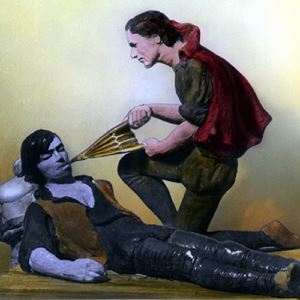 The Bellows Method
1530-1800s
The Bellows Method1 first used by Swiss physician Paracelsus.
1732
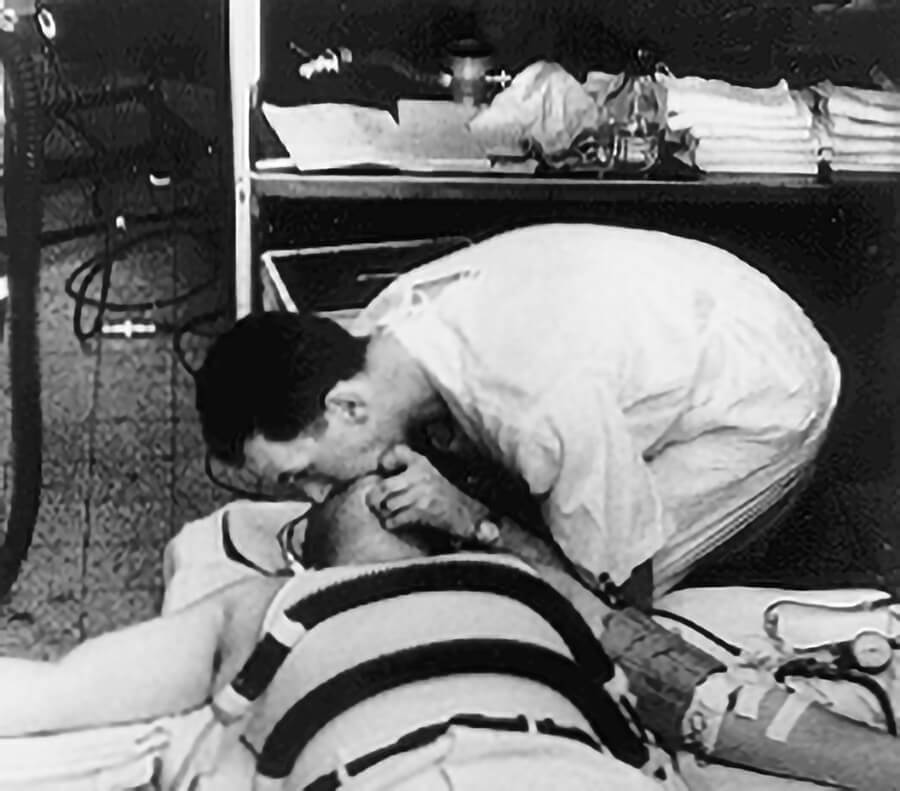
In Alloa, Scotland, local surgeon William Tossach uses mouth-to-mouth
breaths to revive a suffocated coal-pit miner. Dr. Tossach documents
the success 12 years later, in what may be the first clinical description
of mouth-to-mouth resuscitation in medical literature.
1740
The Academie des Sciences in Paris officially recommends
mouth-to-mouth resuscitation for reviving victims of drowning.2
1774
London physicians William Hawes and Thomas Cogan found the
Society for the Recovery of Persons Apparently Drowned (later to
become The Royal Humane Society) to assist victims of sudden and
unexpected death.
1775
Experimenting with animals, Danish veterinarian Peter Abildgaard
discovers that after rendering a chicken lifeless by shocking it,
countershocks to the chest could restore a heartbeat.3
1782
The Royal Humane Society expresses its preference for using
bellows rather than mouth-to-mouth ventilation to artificially inflate the lungs.4
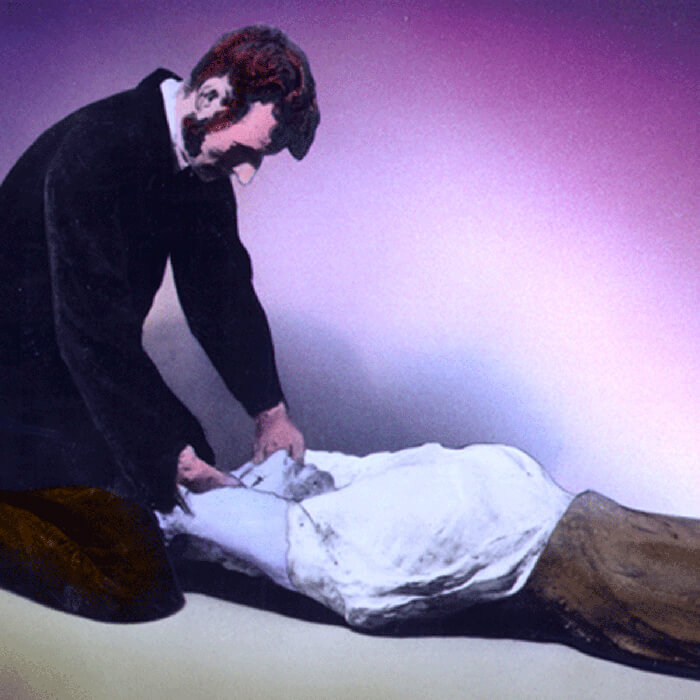
The Hall and Silvester methods become the most commonly used
forms of artificial respiration until the early 20th century.5
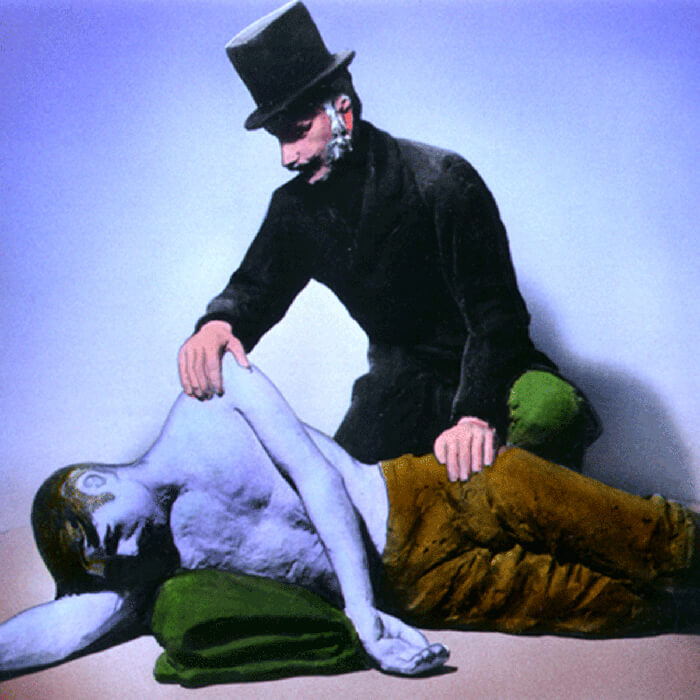
The Hall Method
The Silvester Method
1856
London physician Marshall Hall introduces his simple resuscitation technique: alternately repositioning the patient from face up to side. He updates the approach by adding pressure on the thorax.6
1858
Henry Silvester, another London physician, creates the chest-pressure arm-lift method: raise the patient’s arms up to expand the chest, then cross the arms over the chest to apply expiratory pressure.7
1874
German physiologist Moritz Schiff’s research on animals in Florence,
Italy8 reveals that massaging the heart during surgery can restore circulation.
1878
In Germany, Rudolph Boehm shows that external compressions
of the heart provide adequate circulation in cats.9
1891
After using external compressions to restart the hearts of 2 young
human patients, German surgeon Dr. Friedrich Maass becomes the
first to advocate chest compressions, rather than ventilation alone,
to help with circulation.10 But the technique doesn’t take hold, and
for the next half century, open-heart massage is the standard.
1903
In Cleveland, Ohio, Dr. George Crile’s research confirms that
external chest compressions restore circulation in dogs.11
1904
Dr. Crile reports successful closed-chest cardiac massage in ONE
human case.12 But once again, the noninvasive technique doesn’t
gain traction, and patients continue to receive open-heart massage.
1924
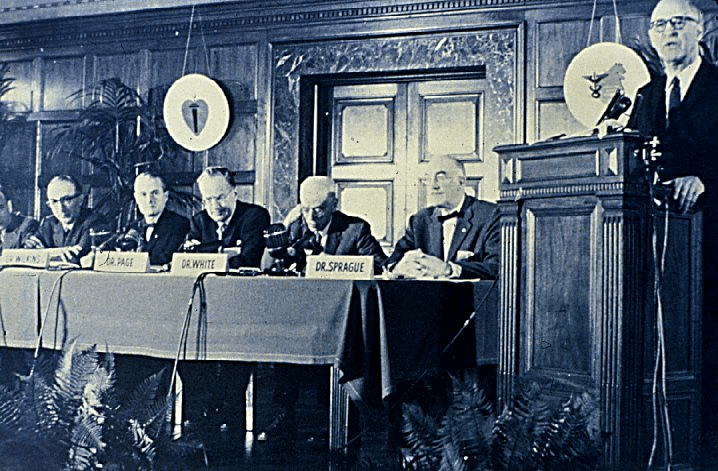
Six cardiologists meet in Chicago and form the American Heart
Association (AHA) as a professional society for physicians.
Nearly a century later, the AHA will be the world leader in CPR
and emergency cardiovascular care (ECC) training and education.
1933
Researchers at Johns Hopkins University, led by electrical
engineer William Kouwenhoven, PhD, accidentally rediscover
external compressions when they find that pressure on a dog’s
sternum provides adequate circulation to the brain to keep the
animal alive until defibrillation can restart its heart. Their results
are confirmed in more than 100 dogs.13
1947
In Cleveland, Ohio, cardiothoracic surgeon Dr. Claude Beck
performs the first successful use of an electric defibrillator
on an exposed human heart.14
The AHA begins publishing Circulation, a scientific journal
that informs doctors, researchers, and others about
cardiovascular breakthroughs.
1954
American physician and respiratory researcher Dr. James Elam
becomes the first person to prove that expired air is sufficient
to maintain adequate oxygenation.15
1956
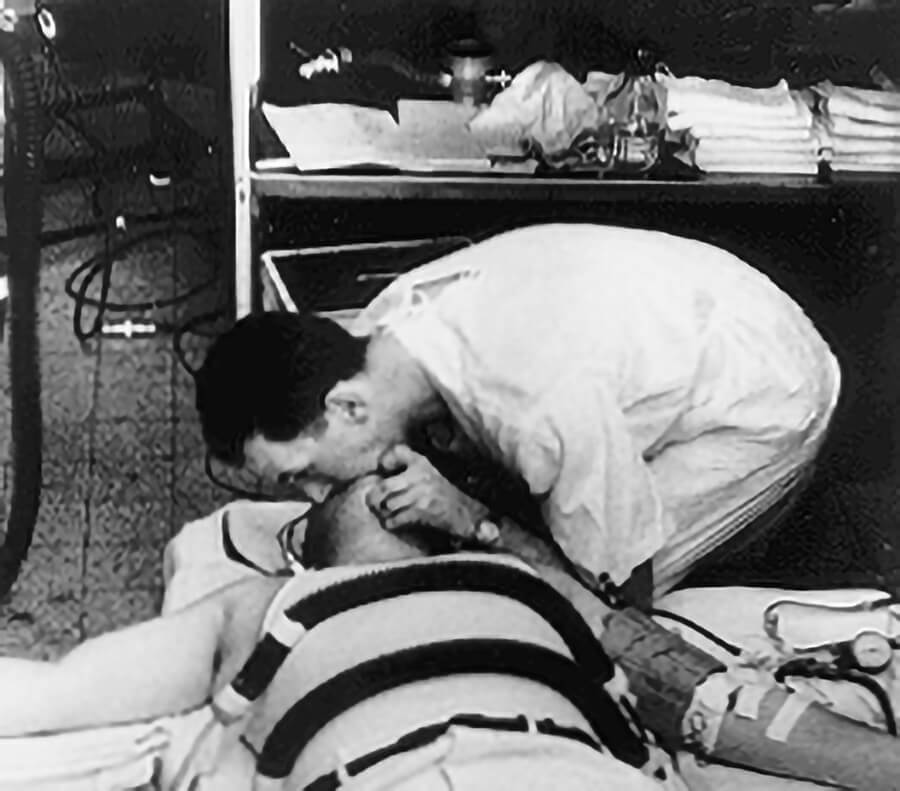
Dr. Elam and Dr. Peter Safar prove that mouth-to-mouth
resuscitation is an effective lifesaving method. Drs. Elam,
Safar, and Archer Gordon play leading roles in promoting
rescue breathing to professional healthcare providers and
the public alike.16For the first time in human medicine, an external defibrillator
successfully restores a steady rhythm to a quivering heart.
Harvard cardiologist Dr. Paul Zoll leads the study with
funding from the AHA.
1957
The United States military adopts the mouth-to-mouth
resuscitation method to revive unresponsive victims.
Dr. Safar performs mouth-to-mouth resuscitation in Baltimore, 1957.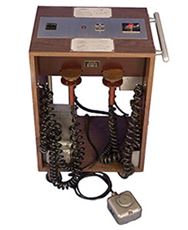 A Hopkins Closed Chest Defibrillator
1957: Johns Hopkins team unveils first portable external defibrillator
After several years of research on closed-chest defibrillation, Dr. Kouwenhoven’s team at John’s Hopkins, which includes James Jude, MD, and Guy Knickerbocker, PhD, unveils its prototype of the first portable external defibrillator (on a wheeled cart): the 200-lb Hopkins Closed Chest Defibrillator.17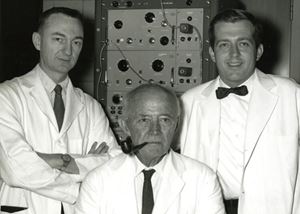 (l to r) Doctors Jude, Kouwenhoven, and Knickerbocker
1960
Resuscitation pioneers Drs. Kouwenhoven, Safar, and
Jude combine mouth-to-mouth breathing with chest
compressions to create cardiopulmonary resuscitation,
the lifesaving actions we now call CPR.The AHA starts a program to acquaint physicians with
closed-chest cardiac resuscitation, which becomes the
forerunner of CPR training for the general public.
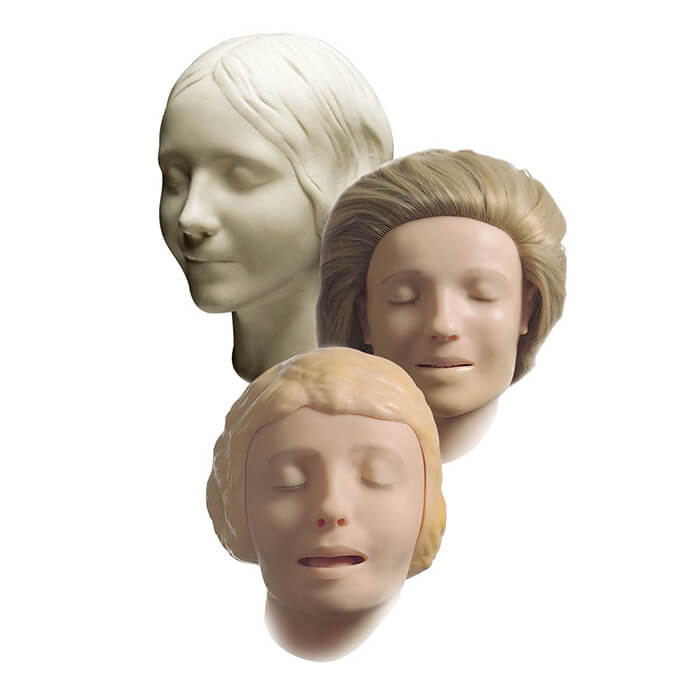
The life-size training manikin (a collaborative effort by
Drs. Safar, Elam, and Gordon and Norwegian toymaker
Åsmund Lærdal) goes on to teach CPR skills to more than
400 million people—and counting—worldwide.18
1963
Cardiologist Dr. Leonard Scherlis establishes the AHA’s
CPR Committee. That same year, the AHA formally
endorses CPR.
1966
The National Research Council of the National Academy of
Sciences convenes an ad hoc conference on cardiopulmonary
resuscitation. The conference is the direct result of requests
from the American National Red Cross and other agencies
to establish standardized training and performance
standards for CPR.
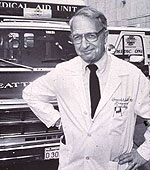 Dr. Leonard Cobb
1972
In Seattle, University of Washington cardiologist
Dr. Leonard Cobb launches Medic II, the world’s first
mass citizen training in CPR.19 During its first 2 years,
the program helps train more than 100,000 people.
1973
Second National Conference on CPR and ECC
1975
The AHA publishes the first Advanced Cardiovascular
Life Support (ACLS) Textbook.
1981
A program to provide telephone instructions for performing
CPR begins in King County, Washington. The program trains
emergency dispatchers to give callers CPR instructions while
EMT personnel are in route to the scene. Fast forward to the
21st century: Dispatcher-assisted telephone CPR is standard
in dispatch centers across the United States.
1983
The AHA convenes a national conference on pediatric
resuscitation to develop CPR and ECC guidelines for pediatric
and neonatal patients.
1985
Fourth National Conference on CPR and ECC
1988
In co-sponsorship with The American Academy of Pediatrics,
the AHA introduces the first pediatric courses: pediatric BLS,
pediatric advanced life support (PALS), and neonatal resuscitation.
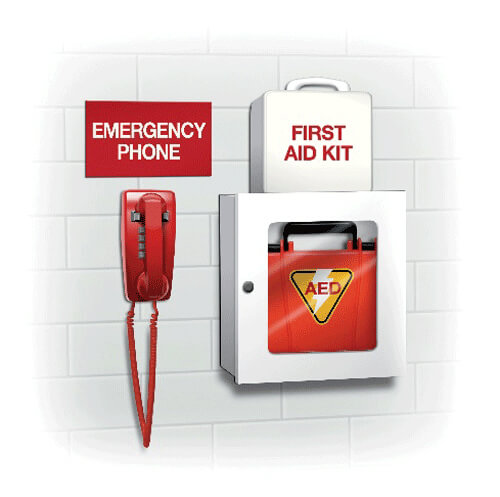
Public access defibrillation programs provide training and
resources, including AEDs, to the public so that they can help
resuscitate victims of cardiac arrest.
1990
Fifth National Conference on CPR and ECC
1992
Founding of the International Committee on Resuscitation (ILCOR)
1999
The first task force on first aid is appointed. This year also sees
the first International Conference on Guidelines for CPR and ECC.
2004
The AHA and ILCOR release a statement about AED use in
children, stating that for children ages 1 year to 8 years who
have no signs of circulation, it is appropriate to use an AED.
2005
The AHA develops the Family & Friends® CPR Anytime® kit,
an innovative product that enables anyone to learn the core skills
of CPR in just 20 minutes. The kit provides everything needed to
learn basic CPR, AED skills, and choking relief anywhere, from a
family room at home to a setting for instructing large groups.The 2005 International Consensus on CPR and ECC Science With
Treatment Recommendations (CoSTR) Conference leads to the AHA
publishing the 2005 AHA Guidelines for CPR and ECC. The
Guidelines recommend a new compression-to-ventilation ratio
of 30:2 as well as changes to AED usage.
2008 – Simpler CPR for bystanders
The AHA releases new recommendations that bystanders who are
untrained, unwilling or unable can use Hands‐Only CPR to help
an adult or teen who collapses suddenly,20 delaying rescue
breaths until help arrives. The change reflects findings from
multiple studies from Dr. Gordon Ewy and colleagues showing
that uninterrupted, high-quality chest compressions without
rescue breaths can be lifesaving in the first minutes of a
sudden cardiac arrest.
2010
After the 2010 International CoSTR Conference, the AHA
publishes the 2010 AHA Guidelines for CPR and ECC. 2010
also marks the 50th anniversary of CPR.2012: Hands-Only CPR Hits the Road to Save Lives 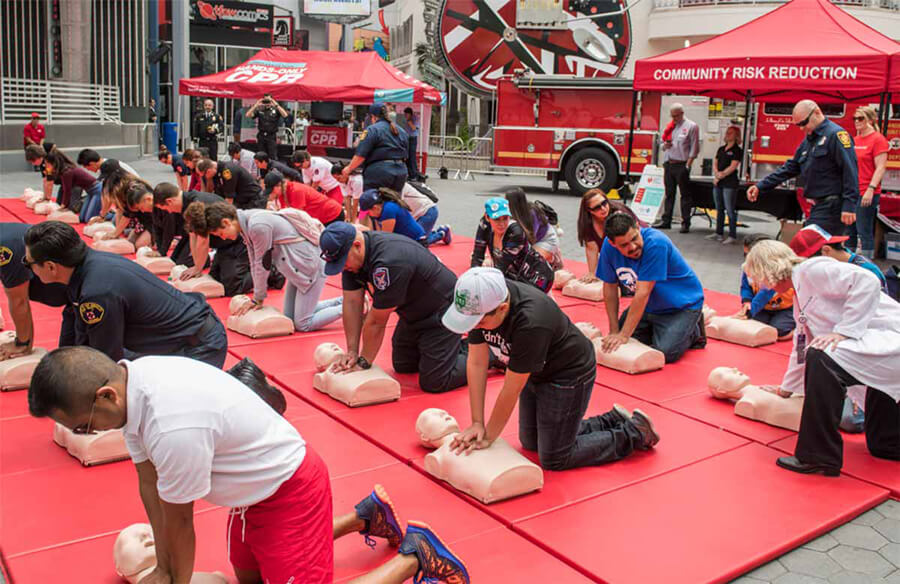
2013
The AHA installs an interactive CPR kiosk at Dallas-Ft. Worth
airport. It features a practice manikin, video, and touch screen
that give performance feedback as passengers between flights
learn to perform hands-only CPR. Within 5 years, there will be
more than 30 CPR kiosks in cities across the country.
2015
The Institute of Medicine releases its report Strategies to
Improve Cardiac Arrest Survival: A Time to Act (2015). After
the 2015 International CoSTR Conference, the AHA publishes
the 2015 AHA Guidelines Update for CPR and ECC.
2017
The AHA begins its continuous evidence evaluation process
for the Guidelines for CPR and ECC and, later that year,
releases the 2017 Focused Update.
2018
In June, the AHA publishes “Resuscitation Education Science:
Educational Strategies to Improve Outcomes from Cardiac Arrest”
in the journal Circulation. This statement, which is applicable to all
resuscitation training programs (not exclusive to AHA), examines
best practices in education and applies them to resuscitation. By
implementing the statement’s guidance, training programs and
resuscitation instructors will help raise the standard of care and
increase survival from cardiac arrest.
source:
#smallbusiness #networking #OKCsmallbiz